The Future of Energy Security: Advanced Supply Chain Strategies Are Reducing Global Dependency Risks
Energy Supply Chains Are Facing Unprecedented Disruptions
The global energy industry is grappling with increasing supply chain volatility, driven by geopolitical conflicts, trade restrictions, and infrastructure vulnerabilities. Countries and corporations that once relied on stable fuel imports now find themselves exposed to price fluctuations, logistical delays, and political uncertainty. These challenges have forced energy companies to rethink their supply chain strategies, focusing on resilience, diversification, and operational self-sufficiency.
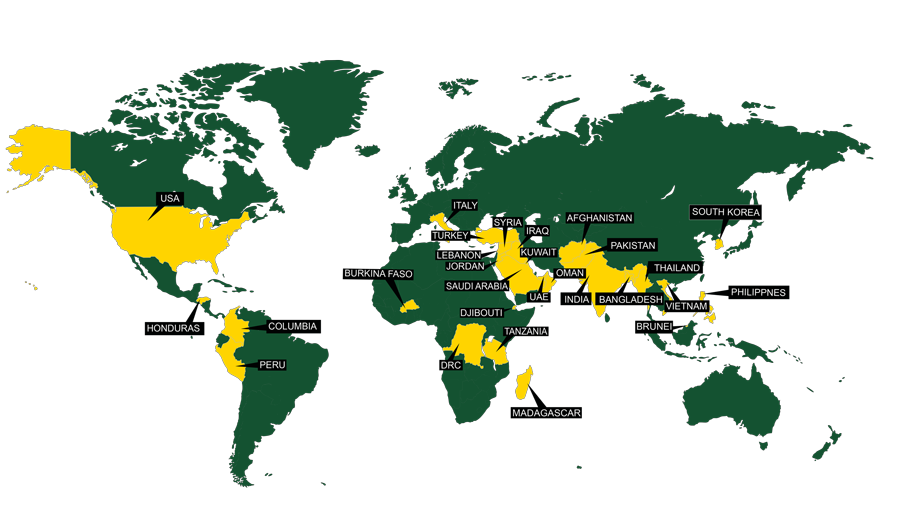
In response to this shifting landscape, SRG has developed cutting-edge supply chain management solutions that reduce dependency on external suppliers while enhancing efficiency, cost-effectiveness, and risk mitigation. With expertise in modular energy systems, on-site refining, and adaptive logistics, SRG is helping industries and governments secure their fuel supply chains in a rapidly evolving global market.
Why Global Energy Supply Chains Are More Vulnerable Than Ever
Energy security has become a pressing concern for both developed and emerging economies, as reliance on long-distance fuel transportation introduces multiple points of failure. Over the past decade, global energy markets have witnessed disruptions due to trade disputes, sanctions, natural disasters, and cyberattacks. The COVID-19 pandemic further exposed the fragility of just-in-time logistics, forcing companies to reassess their supply chain models.
One of the most significant challenges is geopolitical instability, particularly in oil-producing regions. Conflicts in the Middle East, supply restrictions from major exporters, and fluctuating regulatory policies have led to price volatility and unpredictable access to crude oil and refined fuels. In many cases, governments impose trade restrictions or embargoes, further tightening supply channels and disrupting cross-border fuel transport.
At the operational level, companies are also struggling with aging infrastructure and capacity constraints. Many refineries and distribution hubs are operating beyond their intended lifespan, leading to bottlenecks, maintenance-related shutdowns, and declining efficiency. In this environment, companies that fail to secure alternative supply routes and on-site refining capabilities risk severe operational setbacks.
SRG’s Approach to Strengthening Energy Supply Chains
Recognizing the urgent need for a more resilient energy supply infrastructure, SRG has developed a suite of strategic solutions to minimize dependency on volatile supply routes. By leveraging localized production, real-time logistics monitoring, and decentralized refining, SRG ensures that clients can maintain a stable energy supply regardless of external disruptions.
A key component of SRG’s strategy is its expertise in mobile, modular refining solutions, which allow industries to process fuel on-site, eliminating the need for long-haul transportation. These self-contained systems offer a scalable, efficient alternative to traditional refining and distribution models, ensuring continuous fuel availability even in high-risk regions.
Another critical element is adaptive logistics management, where SRG integrates predictive analytics, risk assessment tools, and contingency planning to anticipate and mitigate disruptions. By implementing real-time tracking and AI-driven supply chain optimization, SRG enables companies to adjust their sourcing and distribution strategies dynamically.
Overcoming a Critical Supply Chain Breakdown in a Resource-Scarce Region
In a recent deployment, SRG was tasked with stabilizing the fuel supply chain for an industrial facility in a region heavily impacted by trade restrictions and logistical bottlenecks. The facility, reliant on external fuel imports, faced severe shortages and skyrocketing costs due to supply chain disruptions.
To address the crisis, SRG implemented a three-tiered approach:
- On-Site Refining: A mobile modular refinery was deployed to process locally available crude oil, reducing dependency on imports.
- Logistics Optimization: AI-driven monitoring systems were integrated into the supply chain, identifying alternative transport routes and minimizing delays.
- Risk Diversification: Multiple regional suppliers were engaged to distribute sourcing dependency across multiple channels, ensuring stability in case of future disruptions.
Within six months, the facility regained full operational capacity, reduced fuel procurement costs by 40%, and eliminated supply-related downtime. The success of this initiative reinforced the importance of decentralized refining and proactive logistics planning in modern energy security strategies.
The Shift Toward Self-Sufficient Energy Models
The global energy sector is moving toward self-sufficiency and localized production models to mitigate the risks associated with long-distance fuel supply chains. The increasing adoption of modular refining, alternative energy sources, and AI-driven logistics management is reshaping the industry’s approach to supply chain resilience.
In the coming years, companies that fail to transition to decentralized, adaptable energy infrastructure will face growing risks in terms of supply constraints, price instability, and regulatory uncertainty. Governments and private sector leaders are recognizing the need for energy independence strategies, investing heavily in technologies that enable on-site fuel production, real-time logistics intelligence, and supply chain diversification.
Redefining Energy Security Through Innovation
As global markets continue to experience economic, political, and environmental shifts, securing a stable, flexible, and resilient fuel supply chain will be critical for businesses and nations alike. SRG is at the forefront of this transformation, equipping industries with scalable, technology-driven energy solutions that provide long-term sustainability in an increasingly unpredictable world.
By combining engineering excellence, advanced logistics management, and modular refining capabilities, SRG is redefining what it means to achieve energy security in the 21st century.